What Size Heat Pump Do I Need? A Sizing Guide
By the Calculate HVAC Load editorial team · Published · Reviewed
Sizing a heat pump is trickier than sizing a furnace or an air conditioner, because a single piece of equipment has to do both jobs. Get it right and you enjoy quiet, efficient comfort all year. Get it wrong and you end up with a clammy house in summer, cold rooms on the coldest nights, or an expensive unit that short-cycles itself to an early grave. This guide walks through the method professionals use: size on the cooling load first, then verify that the same unit can carry the heating load when it is genuinely cold outside.
One machine, two loads
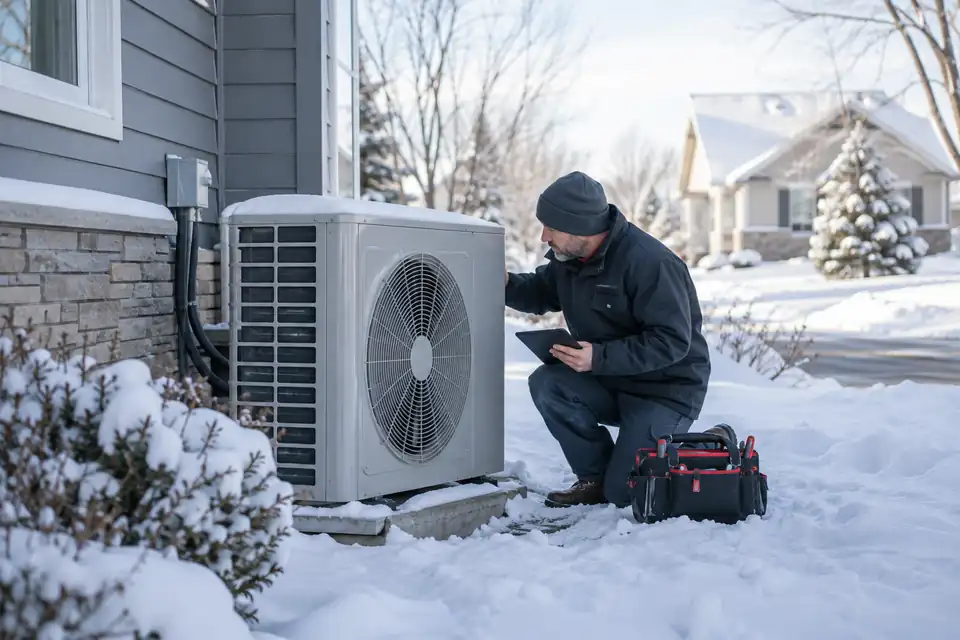
A heat pump is an air conditioner that can run in reverse. In summer it moves heat out of your house; in winter it moves heat in. Because the refrigeration circuit is fixed hardware, the same nominal tonnage has to satisfy two different design conditions: your peak cooling load on a hot humid afternoon and your peak heating load on a frigid winter night. Those two loads are rarely equal, and the gap between them is the whole reason heat pump sizing has its own rules.
Start with a room-by-room load calculation, not a rule of thumb like “500 square feet per ton.” The proper method is a Manual J calculation that accounts for insulation, windows, orientation, air leakage, and local design temperatures. Our heat pump calculator runs a simplified version of this so you can get a defensible starting number before you call a contractor.
Size on the cooling load first
In most of the United States, the cooling load is the constraint that sets the size of the equipment, so that is where you begin. The reason is comfort, not just capacity: an oversized cooling system cools the air so fast that it satisfies the thermostat and shuts off before it has run long enough to pull moisture out of the air.
Match the equipment to the calculated cooling load with little or no padding. A common target is to select a unit no larger than about 115 percent of the calculated sensible-plus-latent cooling load. Variable- speed (inverter) heat pumps tolerate a slightly larger nominal size because they can throttle down, but a single-stage unit should be sized tightly.
Now verify the heating capacity
Here is the catch that trips up most homeowners: a heat pump’s heating output is not constant. As the outdoor temperature drops, there is less heat available in the outside air to move indoors, so capacity falls exactly when you need it most. A nominal 3-ton (36,000 BTU/h) unit rated at 47°F may deliver only a fraction of that at 17°F.
| Outdoor temp | Approx. heating output | Percent of rated |
|---|---|---|
| 47°F | 36,000 BTU/h | 100% |
| 35°F | 30,000 BTU/h | ~83% |
| 17°F | 22,000 BTU/h | ~61% |
| 5°F | 16,000 BTU/h | ~44% |
To verify heating, look up the unit’s rated output at your winter design temperature, not at the standard 47°F rating point. Compare that derated number against your calculated heating load. If the derated capacity falls short, you have three honest options: choose a cold-climate inverter model that holds capacity, add supplemental heat, or go dual-fuel.
The balance point
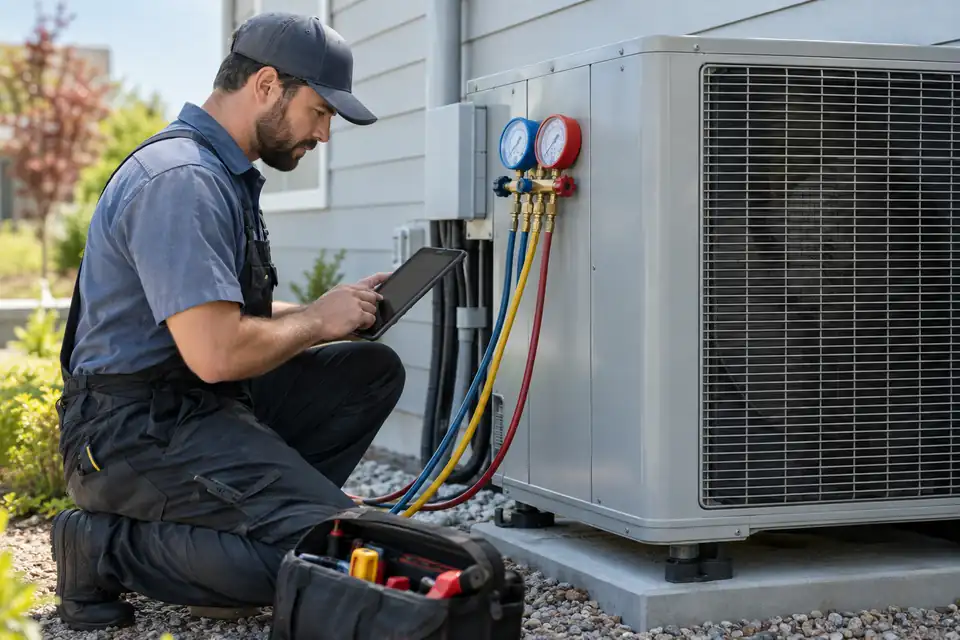
The single most useful concept in heat pump sizing is the balance point: the outdoor temperature at which the heat pump’s declining output exactly equals the building’s rising heat loss.
You can estimate the balance point graphically by plotting the building’s heat loss against outdoor temperature and overlaying the manufacturer’s capacity curve. The heat loss is roughly linear:
UA is the whole-house heat-loss coefficient (BTU/h per °F). Where this line crosses the heat pump's capacity curve is your balance point.
Supplemental heat and dual-fuel
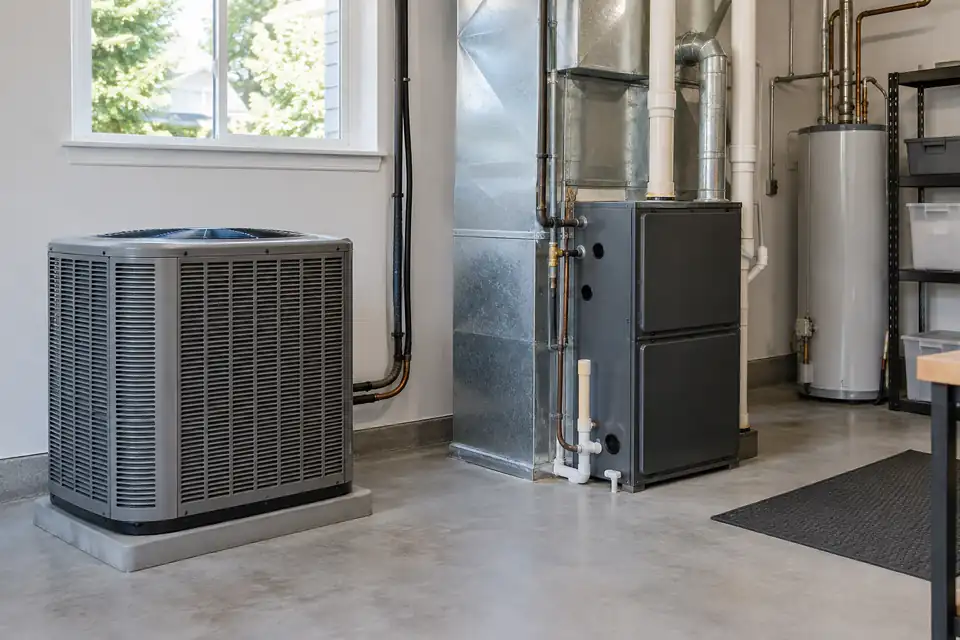
Below the balance point you need backup. There are two common approaches, and the right one depends on your climate and energy prices.
Electric resistance backup
Most air-source heat pumps include or accept electric resistance heat strips in the air handler. They are cheap to install and deliver 100 percent of their rated output at any temperature, but they run at a COP of 1.0, so they are expensive to operate. Sized to cover only the gap below the balance point, they are a reasonable safety margin. Sized to carry the whole house, they defeat the purpose of owning a heat pump.
Dual-fuel (hybrid) systems
A dual-fuel setup pairs the heat pump with a gas or propane furnace. A controller runs the heat pump down to an economic switchover point, then hands off to the furnace for the coldest hours. This keeps the heat pump sized for cooling and mild-weather heating while the furnace covers the deep cold, often the most cost-effective combination in cold climates with existing gas service. If you are weighing this against a furnace-only system, our heat pump vs. furnace comparison breaks down the trade-offs.
A quick sizing workflow
- Run a Manual J load calculation to get separate cooling and heating loads for your specific house.
- Select equipment to match the cooling load tightly, with at most a small margin so dehumidification stays effective.
- Look up the chosen unit’s heating output at your winter design temperature and compare it to the heating load.
- Find the balance point; if it is too high for your climate, upgrade to a cold-climate model or plan for supplemental or dual-fuel heat.
- Size backup heat to cover only the load below the balance point, not the entire heating load.
Heat pump sizing rewards precision: you are balancing summer humidity control against winter capacity in one machine, and padding the number hurts you in both seasons. Start with a real load calculation, verify the derated heating output at your design temperature, and decide how you will cover the gap below the balance point. When you are ready to put numbers to your own house, run them through our heat pump calculator to get a right-sized starting point before you talk to a contractor.
Calculation guidance is reviewed against our published methodology. To report an error or request a correction, use the contact page.