What Size Furnace Do I Need? BTU by Home Size
By the Calculate HVAC Load editorial team · Published · Reviewed
A furnace is sized to your home's heating load — the BTU per hour it takes to hold a comfortable indoor temperature on the coldest design day of the year. The catch is that furnace nameplates list two very different BTU numbers, input and output, and only one of them matches your load. This guide shows you how to estimate output BTU by home size and climate, convert that into the input rating you actually shop for, and avoid the oversizing trap that wrecks comfort.
Input BTU vs output BTU
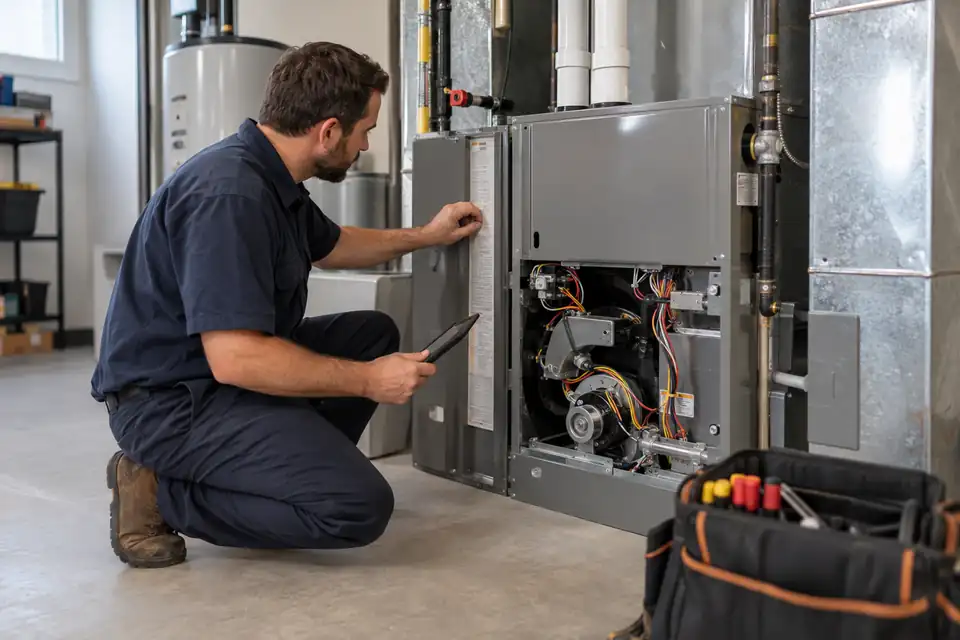
Every gas furnace burns fuel to make heat, but not all of that heat reaches your rooms. Some goes up the flue with the combustion gases. The input rating is how much energy the burner consumes; the output rating is how much usable heat is delivered into your ductwork. The gap between them is set by efficiency.
That efficiency is measured as AFUE — Annual Fuel Utilization Efficiency — expressed as a percentage. A 96% AFUE furnace turns 96% of the fuel it burns into delivered heat and loses 4% to the flue. The relationship is simple multiplication:
Example: an 80,000 BTU/hr input furnace at 96% AFUE delivers 80,000 x 0.96 = 76,800 BTU/hr of usable output.
This matters because your heating load is an output number. It describes the heat the house needs delivered, not the fuel a burner consumes. Size to output, then back into the input rating you buy.
Output BTU by home size and climate
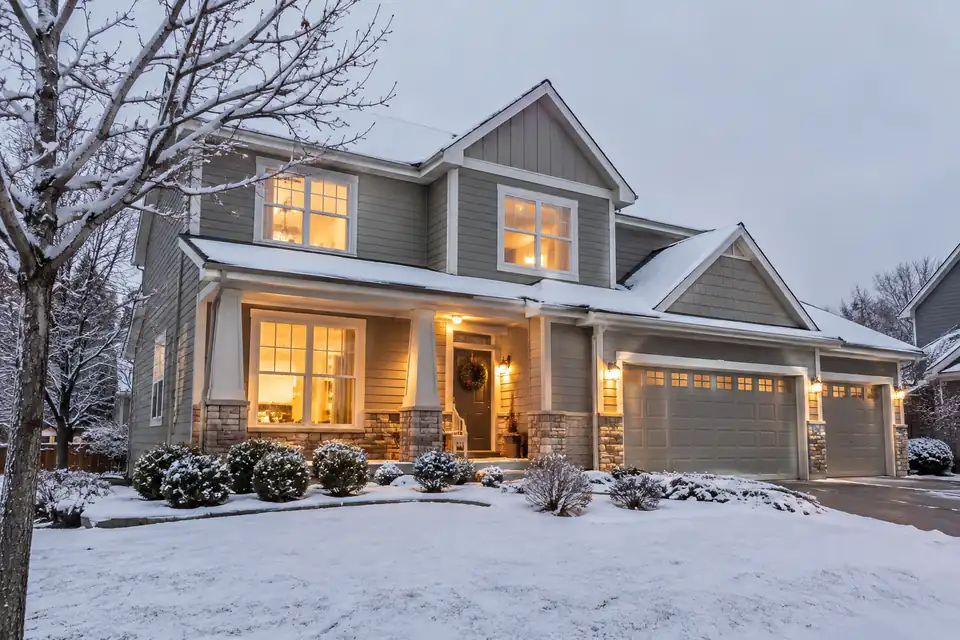
Square footage gives you a fast first estimate, but the same house needs far more heat in Minnesota than in Georgia because the heating load is driven by the temperature difference (ΔT) between your indoor setpoint and the winter design temperature. The table below shows approximate output BTU/hr for an average, reasonably insulated home.
| Home size | Mild (Zone 2-3) | Mixed (Zone 4-5) | Cold (Zone 6-7) |
|---|---|---|---|
| 1,000 sq ft | 20,000-30,000 | 30,000-40,000 | 40,000-50,000 |
| 1,500 sq ft | 30,000-45,000 | 45,000-55,000 | 55,000-70,000 |
| 2,000 sq ft | 40,000-55,000 | 55,000-70,000 | 70,000-90,000 |
| 2,500 sq ft | 50,000-65,000 | 65,000-85,000 | 85,000-110,000 |
| 3,000 sq ft | 60,000-75,000 | 75,000-100,000 | 100,000-130,000 |
From output BTU to the furnace you buy
Furnaces are listed and sold by their input rating, in common sizes like 40,000, 60,000, 80,000, 100,000, and 120,000 BTU/hr. Once you know the output BTU your home needs, rearrange the formula to find the input rating to shop for:
Then round up to the nearest standard input size the manufacturer offers.
A worked example
Say a 2,000 sq ft home in a mixed climate has a calculated heating load of about 60,000 BTU/hr of output. At 95% AFUE:
An 80,000 BTU/hr input furnace at 95% AFUE delivers 76,000 BTU/hr output. That leaves modest headroom over the 60,000 load without grossly oversizing — and a two-stage or modulating model can throttle down to match milder days.
Notice the smallest standard size above the requirement was the right pick. The temptation is always to jump another size up "just to be safe," but that is exactly where furnaces go wrong.
Why oversizing hurts
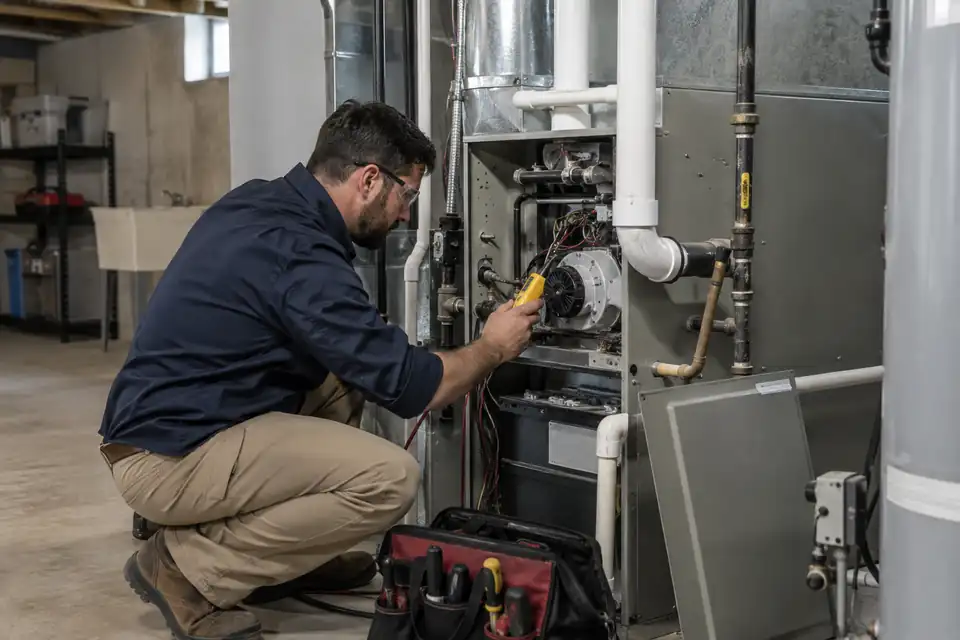
An oversized furnace satisfies the thermostat in a few minutes, shuts off, then fires again a short while later. This short cycling creates a string of problems:
- Temperature swings. Big blasts of heat overshoot the setpoint near the thermostat while far rooms stay cold, so comfort feels uneven from room to room.
- More wear. Ignition and the heat exchanger take the most stress at startup, so frequent on/off cycling shortens equipment life and stresses the blower and igniter.
- Lower real-world efficiency. A furnace is least efficient in the first minute of each cycle, before the heat exchanger is fully warmed, so many short cycles waste fuel.
- Noise and drafts. Frequent full-blast starts are louder and push more cold air at the moment the blower kicks on.
The fix is to right-size. Aim to keep the furnace output within roughly 15% of the calculated design heating load. A little headroom helps the home recover after a setback or an unusually cold snap, but a furnace that is double the load will never run long, steady cycles — the cycles that actually keep a house evenly warm.
What changes the load
Two homes of identical square footage can have heating loads that differ by 50%. Before you trust any chart, account for the factors that move the number:
- Climate / design temperature.The colder the winter design day, the larger the ΔT and the bigger the load.
- Insulation and air sealing. A tight, well-insulated envelope can cut the load dramatically versus a leaky older home.
- Windows. Single-pane or large glass areas lose a lot of heat; modern low-E double or triple glazing loses far less.
- Ceiling height and layout. Tall ceilings and sprawling one-story footprints have more surface area to lose heat through.
- Ductwork. Leaky ducts in unconditioned space waste delivered heat and effectively raise the load the furnace must meet.
A sizing chart is a useful gut check, but the accurate path is to run the numbers for your actual home. Estimate your output BTU with the heat load calculator, then let the furnace size calculator convert that load and your target AFUE into the exact input rating to shop for — so you buy a furnace that runs long, quiet, efficient cycles instead of one that short-cycles your comfort away.
Calculation guidance is reviewed against our published methodology. To report an error or request a correction, use the contact page.