Manual J vs Manual S vs Manual D, Explained
By the Calculate HVAC Load editorial team · Published · Reviewed
Manual J, Manual S, and Manual D are three separate ACCA standards that do three separate jobs, and they are meant to run in that order. Manual J calculates how much heating and cooling your house actually needs, Manual S picks equipment that matches that load, and Manual D designs the duct system that delivers the airflow. Treat them as one connected workflow and you get a quiet, efficient, evenly comfortable system. Skip a step and you get the oversized, short-cycling, poorly-balanced system most homes are saddled with.
The three manuals at a glance
ACCA (the Air Conditioning Contractors of America) publishes the residential design standards that building codes and utility rebates reference. Three of them form the backbone of any correctly sized forced-air system. Each one answers a different question and hands its output to the next.
| Manual | Answers | Key inputs | Output | Used by |
|---|---|---|---|---|
| Manual J | How much heating and cooling does this house need? | Square footage, climate design temps, insulation, windows, orientation, air leakage, occupants | Room-by-room and whole-house load in BTU/hr (sensible + latent) | Load calculator / designer |
| Manual S | Which equipment matches that load? | The Manual J load, local design conditions, manufacturer performance (expanded) data | A specific model and capacity, sized to the load at your design conditions | Designer / contractor |
| Manual D | How do we deliver the required airflow to each room? | Equipment blower data, room loads (CFM), duct layout, available static pressure | Duct sizes, layout, and register selections for balanced airflow | Designer / installer |
Manual J: the load calculation
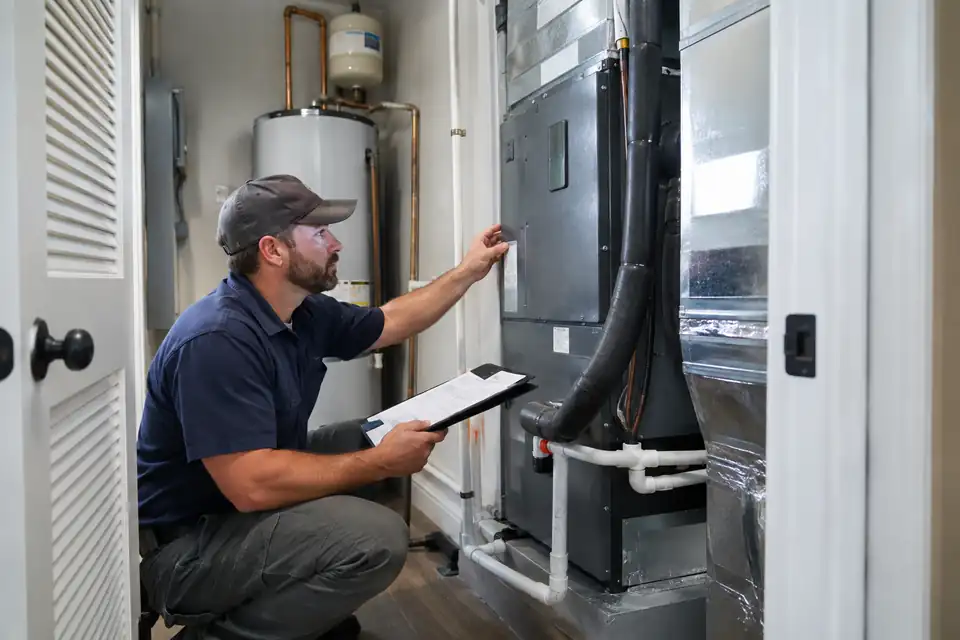
Manual J is the foundation. It is a room-by-room accounting of every way heat moves into or out of the house: conduction through walls, ceilings, and floors; solar gain through windows by orientation; air leakage and ventilation; and internal gains from people, lights, and appliances. It produces two cooling numbers that matter — sensible load (the heat you feel as temperature) and latentload (the moisture the system has to remove) — plus a winter heating load.
Crucially, Manual J is not a square-footage rule of thumb. Two identical floor plans can differ by 50% in load depending on insulation, window area, shading, and climate. That is why a real calculation, rather than "one ton per 500 square feet," is the only honest starting point. You can run an estimate with the Manual J calculator to see how each input moves the BTU number.
Manual S: equipment selection

Manual J tells you the load; Manual S chooses the box that meets it. Nominal tonnage on a nameplate is not the whole story — a "3 ton" condenser delivers different real capacity depending on outdoor temperature, indoor coil, and airflow. Manual S works from the manufacturer's expanded performance tables to confirm the equipment delivers the right capacity at your local design conditions.
Manual S also enforces sensible sizing limits. For cooling, it generally caps total capacity at no more than 115% of the cooling load (and is stricter in humid climates), because excess capacity satisfies the thermostat before it has run long enough to wring moisture out of the air. Matching capacity to load is what lets a system run long, steady cycles instead of short bursts.
Manual D: duct design
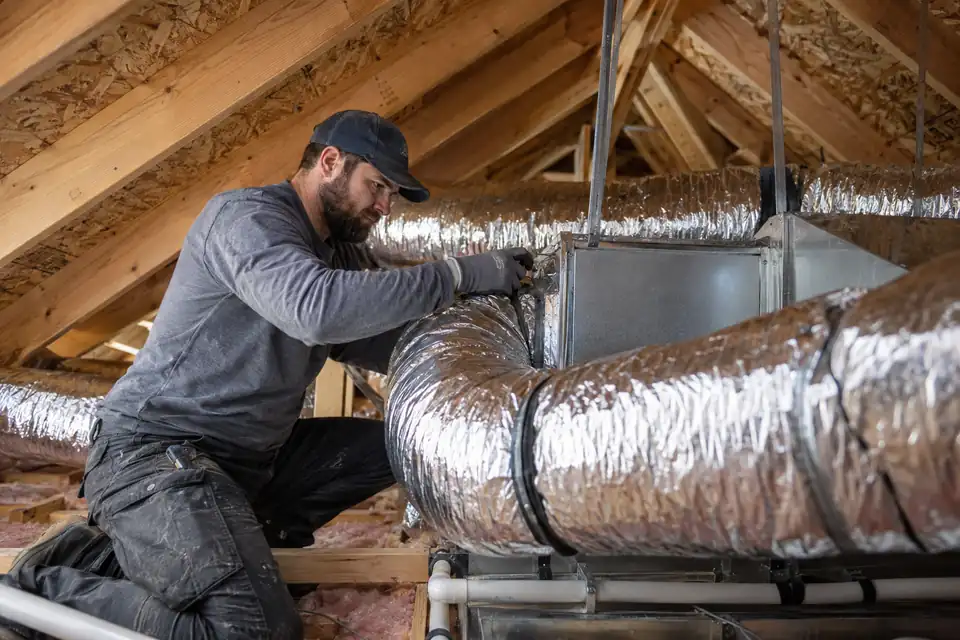
Even perfectly sized equipment fails if the ducts cannot deliver the air. Manual D converts each room's load into a required airflow (CFM), then sizes the trunks, branches, and registers so every room gets its share without choking the blower. The governing limit is available static pressure— how hard the blower can push against the resistance of the duct system, coil, and filter.
Undersized or badly routed ducts raise static pressure, which drops airflow across the coil. Low airflow can freeze an AC coil, starve far rooms, and force the equipment to run outside the conditions Manual S sized it for — so a Manual D miss quietly undoes the work of both earlier manuals. A quick way to sanity-check trunk and branch sizes for a given CFM is the duct size calculator.
Why the sequence matters
The three manuals only work as a chain. Each one's output is the next one's input, so the order is not optional:
- Run Manual J first. Without an accurate load, every downstream decision is a guess. This is the number everything else depends on.
- Then Manual S.Select equipment whose real, condition-adjusted capacity matches the J load — not a nominal tonnage padded for comfort.
- Finally Manual D.Design ducts around the selected blower's airflow and the room-by-room CFM, within the available static pressure.
Skip Manual J and contractors fall back on square-footage rules of thumb, which almost always oversize. Skip Manual S and a correct load gets paired with the wrong box. Skip Manual D and the right box gets strangled by ducts that cannot move its air. The failure modes compound:
- Oversizing. Skipping J or S leaves equipment too large for the load, so it short-cycles, never dehumidifies properly, and wears out faster.
- Poor airflow. Skipping D leaves ducts too small or unbalanced, so static pressure climbs, coil airflow drops, and far rooms stay hot or cold.
- Wasted money. A bigger unit and the heavier ducts to feed it both cost more up front while delivering worse comfort and higher bills.
Are there other ACCA manuals?
Yes — Manual T covers air distribution and register selection, and Manual B and others address specific subsystems. But J, S, and D are the core trio for residential forced-air design, and getting them right in order solves the overwhelming majority of comfort and efficiency complaints.
Think of it as load, then box, then ducts — J defines the demand, S matches the supply, and D makes sure the air actually arrives. Start by pinning down your load with the Manual J calculator, then use the system size calculator to translate that load into equipment capacity before you size the ductwork. Run the steps in sequence and you end up with a system that is sized for your home, not for a rule of thumb.
Calculation guidance is reviewed against our published methodology. To report an error or request a correction, use the contact page.